On Demand: Building Inclusive Worlds | Part 1: Foundations

For creative writers looking to decolonize their fiction and avoid harming marginalized people and cultures, crafting immersive worlds for science fiction, fantasy, and other speculative narratives can be especially challenging. Taught by a team of renowned authors and experts, this course explores and explains the foundational worldbuilding concepts of ideology, religiosity, cosmology, sociology, and more. Whether you’re a seasoned storyteller or just starting your journey, this course will equip you with an advanced worldbuilding skillset plus the confidence to create inclusive narratives and worlds that resonate with a wide range of readers. [...]

Excerpt: Refusing Compulsory Sexuality by Sherronda J. Brown

In this book, the author breaks down the ways in which cultures (mostly Western ones) force sexuality on everyone, regardless of orientation. Creators who build worlds and futures should always interrogate their own culture’s “norms” in order to consciously create narratives that challenge, or are in sync with, said norms. The introduction to this book, excerpted below, is an excellent start to interrogating sexuality and the status quo. [...]

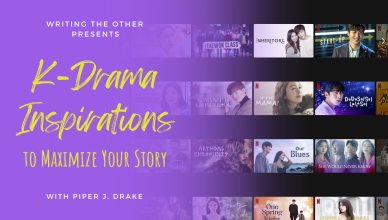
K-Drama Inspirations to Maximize Your Story Webinar

Asian dramas have become incredibly popular, K-dramas in particular. They hook viewers and create a voracious fan base. Why? The plots, characters, and settings have a fresh feel – just enough commonality to give readers an anchor while they’re introduced to elements that are new and different from what they’ve previously experienced. [...]

Write Lore Your Readers Won’t Forget Webinar

In this webinar, author Stant Litore will explore techniques for designing the stories behind the story you’re telling–the stories that your characters either carry in their hearts or resist with all their capacity. How deep does your lore go? And how fiercely does it press on your characters’ lives and actions? Register today and find out! [...]

On Demand: Research Skills for Fiction Writers

Research is a necessary part of the creative process for every fictional narrative, whether you’re creating whole new worlds or futures, using historical settings or events, or crafting characters whose identities or cultures are very different from your own. You don’t have to be a scholar or even a university student to get help and learn how to find the information you need to craft great stories. In this course, reference librarian Melody Steiner will take you through the research process step-by-step. [...]

What To Do If You F%#! Up – Avoiding Career-Ending Missteps

It is a truth universally acknowledged that a writer of fiction will, in the course of their career, screw up. A truth not universally acknowledged is that authors can recover from a screw up, even a highly public one, by avoiding specific behaviors that do nothing but escalate and make the situation worse. Nisi Shawl and K. Tempest Bradford will break down what authors should not do and advise on what they should do, instead. [...]

Non-Linear Story Structures from Non-Western Traditions | Webinar 2024

Western storytelling traditions decree that a linear structure (along with the three act structure, the hero’s journey, and a rising self-esteem arc) are mandatory features of any satisfying story. This is Western-centric silliness. In this webinar, author Henry Lien will explore non-linear structures, specifically cyclic and nested structures, using examples from non-Western stories and films. [...]

Thoughts On Exposition by Kim Stanley Robinson

The good/bad encoded in the “Exposition Bad” binary is wrongly applied, because writing is always telling stories, it’s a function of being caught in time; whether the protagonist of the story is a person or a rock, whether the story is narrated or exposed, there is an equal chance of it being interesting. And the advice “show don’t tell” is a zombie idea, killed forty years ago by the publication in English of Gabriel Garcia Marquez’s One Hundred Years of Solitude, yet still sadly wandering the literary landscape, confusing people. [...]